


An oppidum of the Sequans, Vesontio was celebrated by Julius Caesar in his "Commentaries on the Gallic War". The exceptional defensive site in which the Gallic town developed attracted the attention of the great strategist. Sheltered by its ramparts, the Sevanean city occupied the whole of the Loop, with organised districts and streets lined with timber-framed buildings.
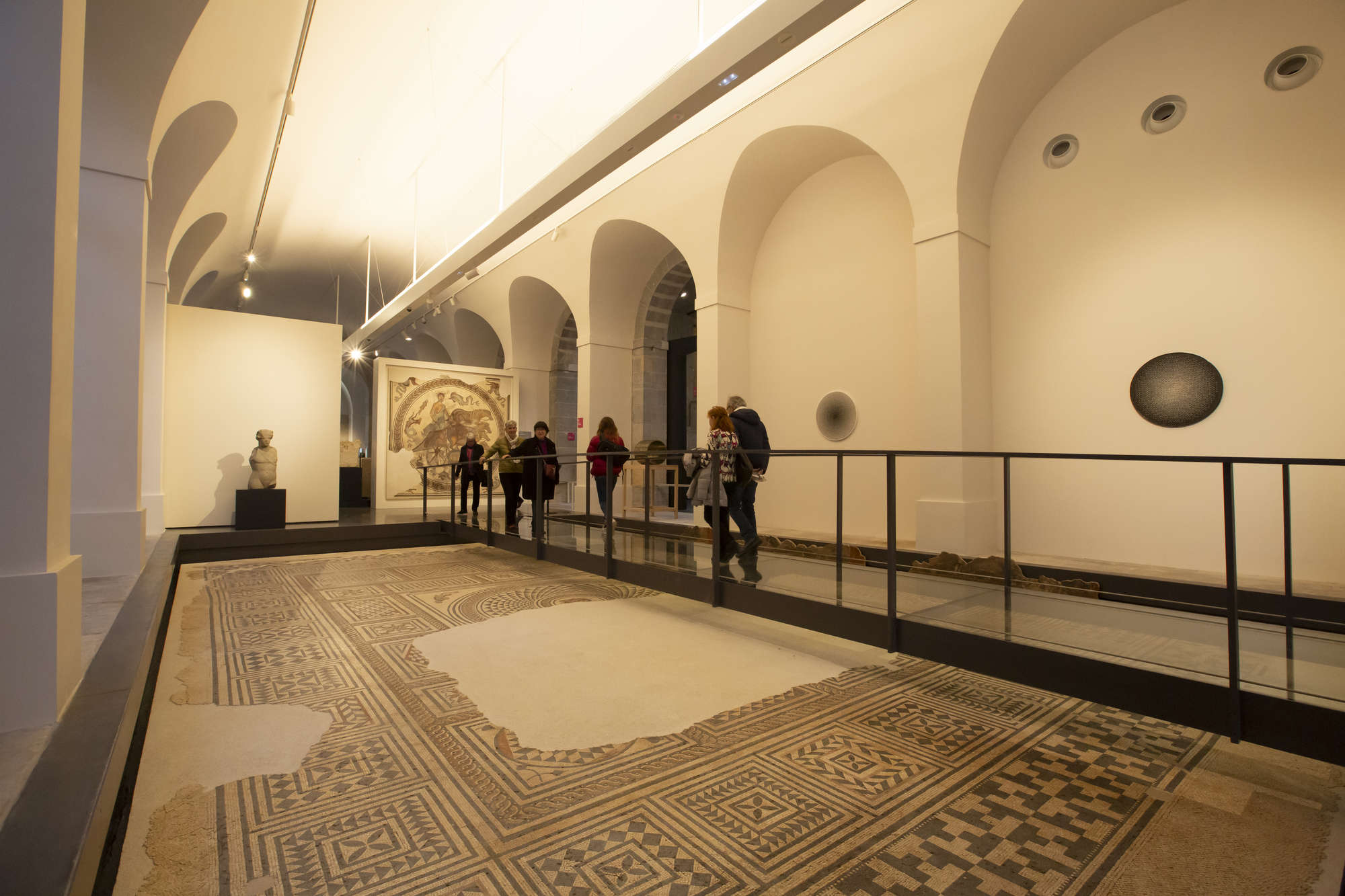
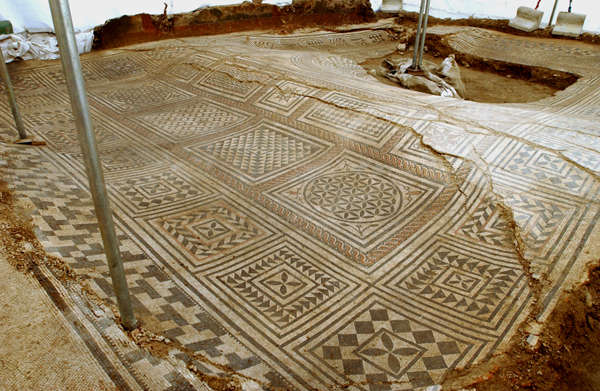
As the capital, Vesontio changed its face. The wealthy districts and public spaces are now characterised by masonry architecture, richly decorated with sculptures, frescoes and mosaics. The discovery of these mosaics began by chance in the 17th, 18th and 19th centuries, and has continued to the present day with archaeological excavations that are now scheduled. Mosaics discovered "recently" are restored, preserved in museums or relocated on or near the site where they were discovered.
There are two complementary routes to discover the mosaics of the ancient city.
Route 1: From the Musée des Beaux-Arts to Collège Lumière
Practical information
Activities
Cultural activities
Guided tours
Rates
| MINI | Max | Additional information | |
|---|---|---|---|
| Free of charge | 0 | Free for people with disabilities disabled people, jobseekers and children under 12. | |
| Basic rate | 9 | ||
| Special rate | 6 | Students, under-18s, associations members of the Tourist Office and Convention Bureau. | |